Electrical gauges play a crucial role in monitoring the performance of marine vehicles. For those navigating the waters of New Zealand, understanding the significance of these instruments can make all the difference in ensuring a safe and efficient journey. Imagine you're sailing off the coast, the sun setting on the horizon, and suddenly, an alert on your dashboard catches your eye.
Is it a minor issue or a sign of something more serious?
Electrical gauges can provide the vital information needed to make informed decisions, ensuring both your safety and the vessel’s performance. This article will explore the various types of electrical gauges, their importance in vehicle performance monitoring, and how to select and maintain them for optimal use.
Let’s delve into knowing more about electrical gauges and understand their importance.

Overview of Electrical Gauges
Electrical gauges measure and display various parameters of a vehicle's performance, such as speed, fuel level, oil pressure, and temperature. These instruments convert electrical signals from sensors into readable data, allowing operators to monitor the status of their vessel’s systems in real-time.
Types of Electrical Gauges
Introduces the different types of electrical gauges, highlighting their unique features and uses:
Digital GaugesDigital gauges use electronic displays to show readings. They are known for their accuracy and ease of reading. These gauges often come with additional features such as alarms and data logging capabilities.
Advantages of Digital Gauges:
- Accuracy: Digital gauges provide precise readings, which are crucial for monitoring critical systems.
- Visibility: The digital display is easy to read, even in low light conditions.
- Advanced Features: Many digital gauges offer features like alarms and data logging, providing more comprehensive monitoring.
Analog Gauges
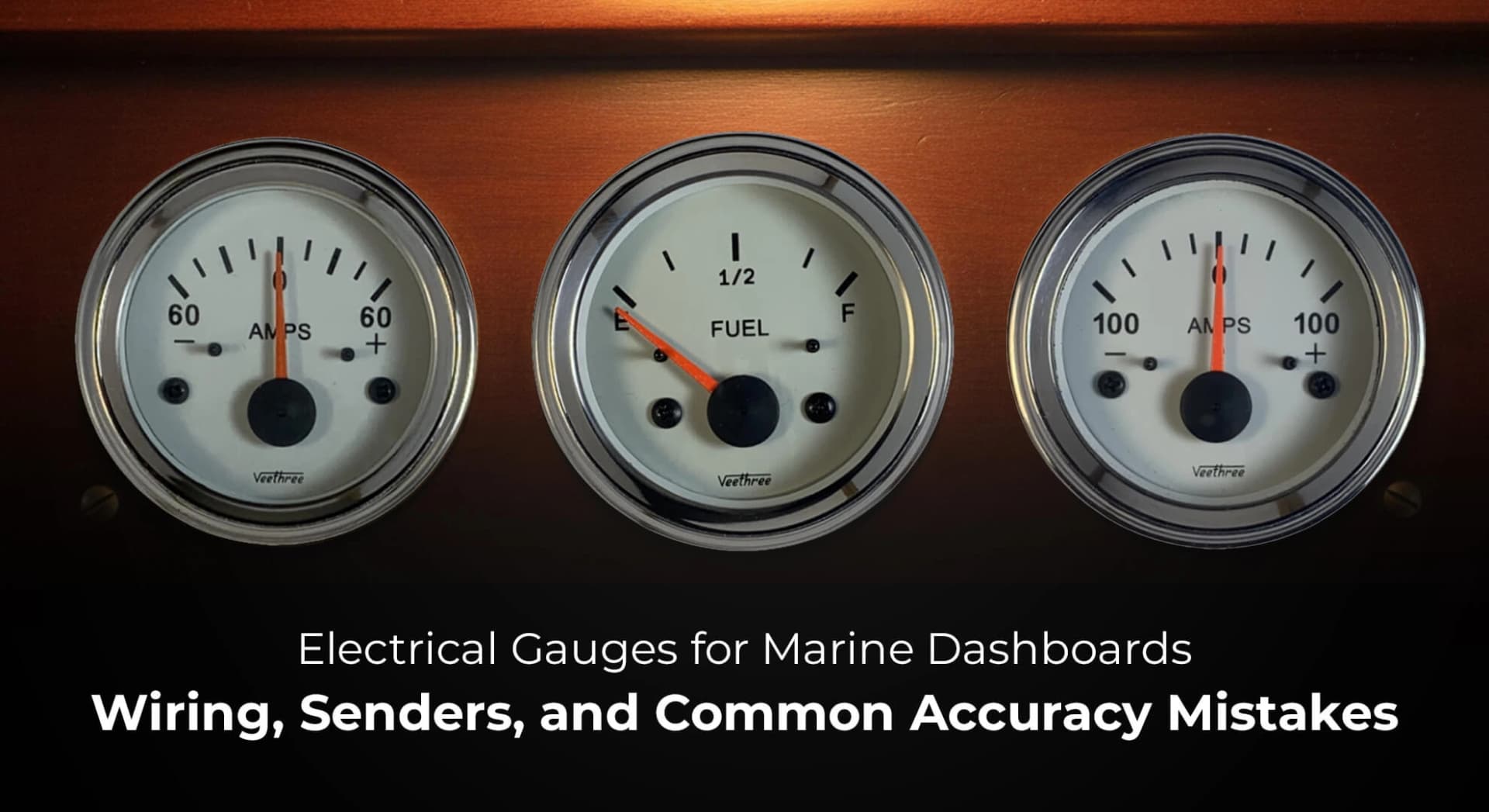
Analog gauges use mechanical movements and a needle to display readings. They have been a staple in the marine industry for many years due to their reliability and ease of use.
Advantages of Analog Gauges:- Simplicity: Analog gauges are straightforward to use and interpret.
- Durability: They are often more durable in harsh marine environments.
- Cost-Effective: Generally, analogue gauges are less expensive than their digital counterparts.
Importance of Electrical Gauges in Monitoring Vehicle Performance
Electrical gauges are essential for maintaining the health and performance of marine vehicles. Here’s why:
Real-Time Monitoring
Electrical gauges provide real-time data on various systems, allowing operators to detect issues as they arise. This immediate feedback is crucial for making quick decisions that can prevent minor problems from escalating into major ones.
Enhanced Safety
By monitoring critical parameters such as fuel levels, oil pressure, and engine temperature, electrical gauges help ensure the vessel operates within safe limits. This reduces the risk of breakdowns or accidents, providing peace of mind to those on board.
Improved Efficiency
Accurate readings from electrical gauges enable operators to optimize the performance of their vessel. For example, monitoring fuel consumption can help in making adjustments that improve fuel efficiency, saving both time and money.
Benefits of Using Electrical Gauges
Using electrical gauges in marine vehicles offers several benefits:
Precision
Electrical gauges, especially digital ones, provide precise measurements that are essential for monitoring sensitive systems. This precision helps in maintaining optimal performance and identifying issues before they become serious.
User-Friendly
Modern electrical gauges are designed to be user-friendly, with clear displays and intuitive interfaces. This makes it easier for operators to understand and act on the information provided.
Durability
Marine environments can be harsh, with exposure to saltwater, humidity, and extreme temperatures. High-quality electrical gauges are built to withstand these conditions, ensuring reliable performance over time.
Customisation
Many electrical gauges can be customized to display the specific parameters that are most important to the operator. This allows for a tailored monitoring system that meets the unique needs of each vessel.
Tips for Selecting & Maintaining Electrical Gauges
Choosing the right electrical gauges and maintaining them properly is crucial for their effective use. Here are some tips:
Selecting Electrical Gauges
- Identify Your Needs: Determine the specific parameters you need to monitor, such as speed, fuel level, or temperature.
- Consider the Environment: Choose gauges that are designed to withstand marine conditions, including water resistance and durability.
- Check Compatibility: Ensure the gauges you select are compatible with your vessel’s existing systems.
- Opt for Quality: Invest in high-quality gauges from reputable brands to ensure accuracy and longevity.
- Seek Professional Advice: If you’re unsure which gauges to choose, consult with a marine professional who can provide recommendations based on your needs.
Maintaining Electrical Gauges
- Regular Inspections: Check your gauges regularly for signs of wear or damage.
- Cleanliness: Keep the gauges clean and free from debris to ensure clear readings.
- Calibration: Periodically calibrate your gauges to maintain their accuracy.
- Protection: Protect the gauges from harsh elements when not in use, using covers or storing them in a safe place.
- Professional Servicing: Have your gauges serviced by a professional if you notice any inconsistencies or malfunctions.
Our Verdict
Electrical gauges are indispensable tools for monitoring the performance of marine vehicles. Whether you’re navigating the waters of New Zealand or sailing elsewhere, these instruments provide the vital information needed to ensure safety, efficiency, and reliability.
By understanding the different types of electrical gauges and their uses, and by selecting and maintaining them properly, you can enhance your boating experience and keep your vessel running smoothly. Safe sailing!