If you run or restore classic boats in New Zealand, your gauges matter. They keep the engine safe, and they set the look of your boat dashboard.
This guide shows you where to Buy Vintage Marine Gauges in NZ, how to choose sizes and marine gauge cut out sizes for classic dashboards, and what to plan for marine wiring on older hulls. Everything here stays close to what Veethree actually sells and supports.
1. Why Vintage Gauges Still Matter on Kiwi Classics
New Zealand has a strong boating culture. Recent Maritime NZ research shows that about 40 percent of adults, around 1.7 million people, count as “boaties”. That means many older boats are still on trailers and moorings, with dashboards that need safe, readable instruments.
1.1 Style plus function on older boats
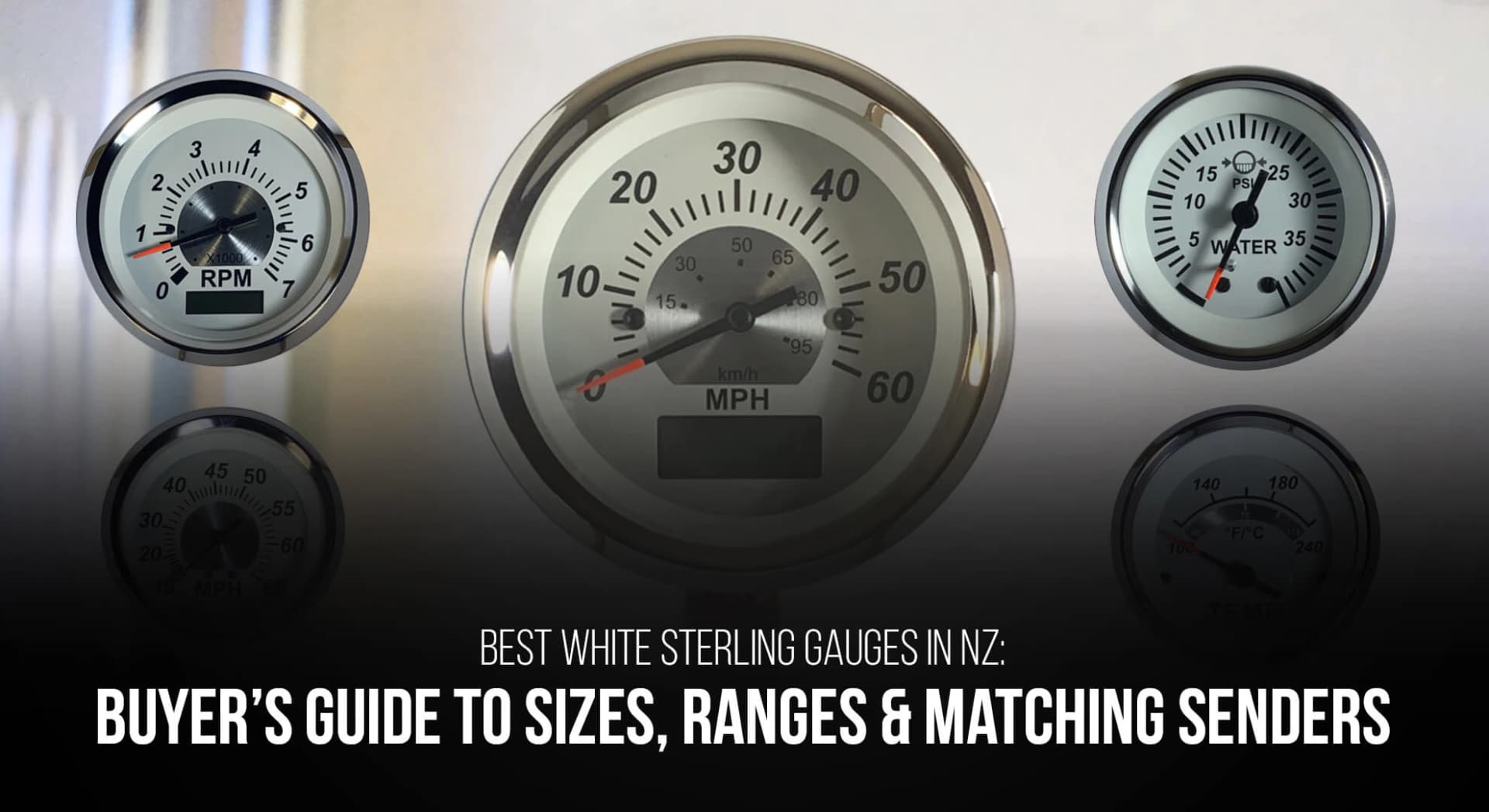
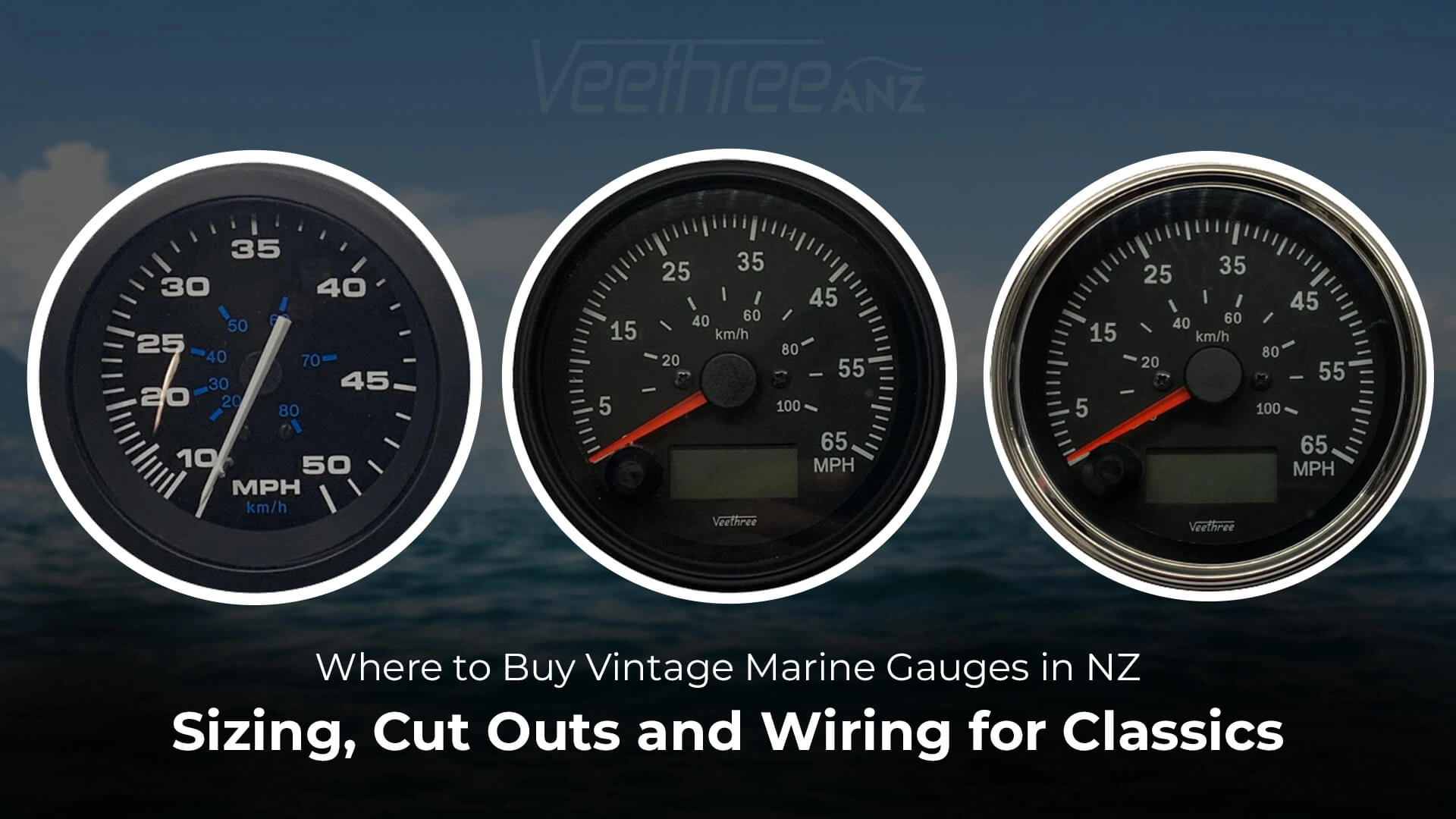
When you look at older cockpits, the gauges are often the first thing you notice. Veethree’s vintage style range focuses on that look while still using modern internals.
You might want:
- retro boat gauges nz for a runabout from the seventies
- vintage boat gauges new zealand owners can match to cream or black dials
- vintage dashboard gauges for boats that look right beside period switches and timber trims
Veethree’s Vintage Gauges range gives you analogue pointers, classic bezels and marine grade build, backed by free NZ shipping from a local warehouse.
1.2 Core instruments every classic should carry
Most classic dashboards need at least four engine instruments, even for short coastal runs.
Common pairs from the Veethree range include:
- oil pressure gauge
- fuel gauge
- water temperature gauge
- voltmeter
You can then add a GPS speedometer and tachometer from the Vintage Gauges family for a fully matched set.
These are not just “nice to have”. They give you early warning of low oil pressure, hot running, charging faults and fuel issues so you can act before damage builds.
2. Where To Buy Vintage Marine Gauges In NZ
You want one clear source, with stock on the shelf and matched senders. That is where Veethree’s NZ operation helps.
2.1 Buy direct from Veethree’s NZ store
Veethree runs a dedicated New Zealand site with all gauges shipped from a local warehouse and free delivery for NZ customers.
From there you can:
- Browse the dedicated Vintage Gauges category for matched sets and single instruments
- Add boat engine gauges for classic boats such as GPS speedometers, tachometers, fuel gauge units and more
- Order compatible senders from the same site so signals and ohm ranges match
Useful internal pages:
- Vintage Gauges category – ideal start points for classic marine instruments nz projects
- Marine Gauges overview – to compare vintage with other bezel and dial styles
- Replacement gauges and senders – for targeted classic boat gauge replacement on one or two dials
- Senders and sensors category – to match each fuel sender or pressure sender to your gauge choice
- Blog on vintage style gauges – background on how Veethree designs and tests its classic look instruments
You order online, then your gauges ship from inside New Zealand. If you need help, the contact details and phone support are listed on every page.
2.2 Replacement options for mixed dashboards
Many classic boats already have holes cut for existing dials. Full tear out can mean extra work on the panel. Veethree also offers:
- Electrical gauges for targeted replacement
- Mechanical gauges if you want to stay close to original layouts
- Digital or GPS speedometers when you want accurate speed without a pitot pickup
You match the format and cut out to the old instrument, then lift performance by swapping in a new Veethree gauge.
3. Sizing And Cut Outs for Vintage Dashboards
Getting sizes right is the main step that keeps your dash tidy and your install simple.
3.1 Common marine gauge diameters
Veethree’s own buying guide notes that 52 millimetre and 85 millimetre cut outs dominate modern electrical gauge panels. That lines up well with many older boats and trailer craft here.
When planning marine gauge cut out sizes for classic dashboards, work through this order:
- Measure the existing hole from edge to edge with a vernier or ruler
- Confirm whether the hole is closer to 52 millimetres or 85 millimetres
- Check that the dash thickness suits the clamp ring shown in the product details
- Confirm back clearance for wiring tails and lighting
This lets you pick vintage style gauges that drop straight in with minimal panel work.
3.2 Step by step – how to measure boat gauge cut out
You can follow a simple process in the shed before you place an order.
- Remove the old gauge but keep it as a reference
- Clean any sealant from the dash so you can see the true edge
- Lay a ruler across the centre of the hole and read the internal diameter
- Check the product page on veethree.co.nz for the matching cut out size
- Note the gauge depth so you know it clears wiring behind the panel
- Repeat for each opening on the boat dashboard
If the hole is between sizes or badly damaged, you can install a new panel insert and recut all holes to a standard pattern.
4. Wiring Vintage Gauges on Classic Boats
Good gauge wiring keeps your instruments stable and your marine electrics safer. Most older boats use simple fifteen- or twelve-volt analogue circuits, which match well with Veethree’s electrical and mechanical ranges.
Industry guides also show that most recreational boats still use analogue gauge systems, even when digital displays are available. That makes classic refits more straightforward than many owners expect.
4.1 How the main gauges connect
Engine instrument experts break gauge wiring into three groups. You see the same pattern on classic dashboards.
For a simple classic petrol or diesel setup:
- oil pressure gauge
- One terminal to ignition live
- One terminal to engine ground
- One sender terminal to the pressure sender on the block
- water temperature gauge
- One terminal to ignition live
- One terminal to ground
- One sender terminal to the temperature sender in the head or thermostat housing
- fuel gauge and fuel sender pairing
- Gauge power terminal to ignition live
- Gauge ground terminal to a solid earth
- Sender terminal to the output on the fuel tank sender
- Sender body grounded to tank or dedicated earth
- voltmeter
- Positive terminal to a fused supply from the distribution panel
- Negative terminal to the main negative bus
Boats.com writer Ed Sherman summarises it clearly when he says that engine instrument wiring comes down to “circuits, senders, and wire colors”.Once you understand those three pieces, most classic layouts make sense.
4.2 Safe marine wiring habits for older hulls
When you refresh gauges, plan some wiring checks as well.
- Use tinned marine cable from the distribution block to each gauge
- Run a clean ground bus behind the dash and avoid random “daisy chain” earths
- Crimp and heat shrink all joints, rather than twisting wires together
- Label each wire at the gauge and at the sender
- Keep wiring looms supported so they do not hang off the gauge terminals
Maritime NZ research shows that many people now take fewer trips due to time and cost pressures. That means some boats sit longer between outings. Good wiring helps your gauges still work when you do finally launch.
If your layout feels complex, talk with a qualified marine electrician. They can check your work, confirm fuse sizes and ensure everything meets accepted standards for small craft.
5. Planning A Gauge Upgrade for a Boat Restoration
A gauge swap is often one part of a bigger boat restoration plan. New Zealand’s recreational boat market continues to grow, with a dedicated forecast through to 2031.Well-kept classics sit inside that picture and benefit from tidy instrumentation.
5.1 Short checklist before you order
Work through these points before you add gauges to your cart.
- Confirm how many holes you have and their diameters
- Decide which functions you want on the main panel
- Check which senders are already fitted to the engine and the tank
- Note their resistance curves or model numbers if you can see them
- Decide if you want full vintage style or a mix of vintage and modern clusters
- Confirm system voltage and battery layout
Veethree’s broader content on types of gauges, marine performance and electrical monitoring gives you more background if you need it.
5.2 When to keep and when to replace senders
In some cases, you can keep existing senders. In other cases, a fresh matching sender avoids nuisance faults.
You should consider new senders when:
- You do not know the original ohm range
- The old gauge failed due to corrosion or water ingress
- The tank or engine has been replaced
- You are mixing instruments from different brands
Veethree sells a full range of universal and reed switch fuel sender units in common ohm ranges such as 240 to 33 ohms and 10 to 180 ohms. Matching these with a Veethree fuel gauge keeps readings more stable and reduces troubleshooting later.
6. Trends In Classic Boats and Vintage Gauges
A few broader trends help explain why vintage marine gauges New Zealand stay in demand.
- Maritime NZ monitoring shows that about 40 percent of adults still engage in boating, but actual trip frequency has dipped in recent years.
- A New Zealand recreational boat market study highlights steady growth through to 2031, with strong interest in leisure and fishing craft.
- Global data shows that boats under twenty feet make up more than half of new units sold, and many of those use simple analogue gauge sets that fit older layouts as well.
Kirsten Thomas from Boating New Zealand puts it plainly: “Boating is still embedded in the Kiwi lifestyle”. That includes everything from new trailer boats to carefully maintained classics with refreshed dashboards.