Have you ever considered how much downtime costs at sea?
A single malfunction can disrupt operations, lead to expensive repairs, or worse—jeopardise safety. That’s where predictive maintenance steps in, ensuring equipment runs smoothly and efficiently.
But predictive maintenance can only be effective when supported by reliable monitoring tools.
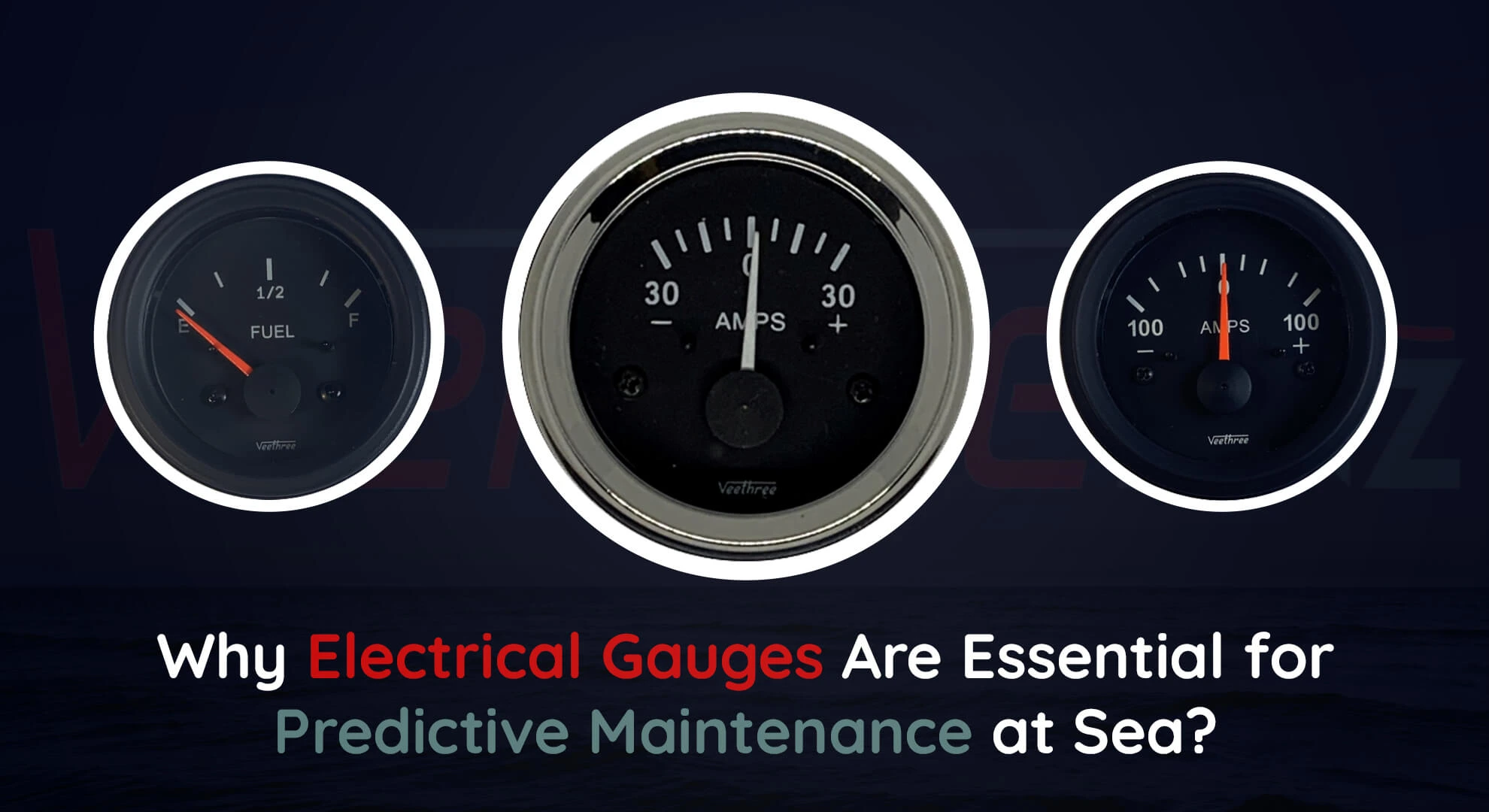
This is where Electrical Gauges come into play. Designed for precision and durability, these gauges provide real-time data that helps marine professionals detect irregularities before they become major issues.
Let’s explore how electrical gauges power predictive maintenance and keep marine operations running at peak performance.
Understanding Predictive Maintenance at Sea
Predictive maintenance focuses on forecasting equipment failures based on real-time data. Unlike reactive maintenance, which addresses issues after they occur, or preventive maintenance, which follows a fixed schedule, predictive maintenance uses continuous monitoring to determine the right time for servicing.
Key benefits of predictive maintenance include:
- Minimised Downtime: Schedule maintenance when needed, not after breakdowns.
- Cost Efficiency: Prevent expensive repairs through early issue detection.
- Safety Assurance: Identify potential safety risks before they cause accidents.
- Extended Equipment Lifespan: Reduce wear and tear through timely maintenance.
Why It Matters: Predictive maintenance reduces operational risks and costs while ensuring optimal performance—especially crucial for marine vessels navigating unpredictable waters.
How Electrical Gauges Support Predictive Maintenance?
Real-Time Monitoring for Critical Systems
Electrical Gauges continuously track vital metrics such as engine temperature, fuel levels, oil pressure, and electrical loads. This real-time data ensures that operators can detect minor changes that may indicate potential failures.
- Instant feedback for quick decision-making.
- Continuous performance tracking across all critical systems.
- Reduced downtime through early detection of anomalies.
Why It Matters: Real-time monitoring empowers operators to act before issues escalate, preventing costly breakdowns.
High Accuracy and Sensitivity
The advanced sensors in electrical gauges provide precise readings with minimal deviation. In marine operations, where even a slight error can lead to significant issues, this level of accuracy is essential.
- Precision data for informed decision-making.
- Early detection of performance degradation.
- Reliable alerts for critical conditions.
Why It Matters: Accurate data allows operators to schedule maintenance when it’s genuinely needed, reducing unnecessary repairs and operational disruptions.
Seamless Integration with Marine Systems
Modern marine vessels rely on complex systems that require integrated monitoring solutions. Electrical gauges are designed to seamlessly connect with digital control systems, offering a centralised view of vessel performance.
- Easy integration with existing onboard systems.
- Centralised monitoring for better operational control.
- Real-time data sharing across connected systems.
Why It Matters: Seamless integration reduces operational complexity, allowing for efficient predictive maintenance planning.
Customisable Alerts for Early Issue Detection
Electrical gauges can be programmed to issue alerts when parameters fall outside optimal ranges. These alerts enable operators to intervene before minor issues become major problems.
- Tailored alert settings for specific operational needs.
- Immediate notifications for rapid response.
- Reduced downtime through proactive maintenance.
Why It Matters: Custom alerts improve response times, ensuring operators address issues promptly, maintaining vessel safety and efficiency.
Durability in Harsh Marine Environments
Marine environments are challenging, with constant exposure to saltwater, vibrations, and temperature fluctuations. Electrical gauges are built to withstand these conditions, providing reliable performance even in the harshest environments.
- Corrosion-resistant materials for longevity.
- Shock and vibration tolerance for stable readings.
- Temperature-resilient designs for consistent performance.
Why It Matters: Durable gauges minimise the risk of failure, reducing maintenance needs and ensuring operational reliability.
Best Practices for Using Electrical Gauges in Predictive Maintenance
- Regular Calibration: Ensure gauges remain accurate by calibrating them at recommended intervals.
- Routine Inspections: Check for signs of wear, corrosion, or electrical issues.
- Data Analysis: Use historical data from gauges to identify trends and predict future maintenance needs.
- System Integration: Ensure gauges are properly integrated with other onboard systems for centralised monitoring.
- Operator Training: Equip the crew with the knowledge to interpret gauge data and respond appropriately.
Our Verdict
In marine operations, predictive maintenance is only as good as the tools that support it. Electrical Gauges provide the precise, real-time data needed to detect potential issues before they disrupt operations.
With their advanced monitoring capabilities, seamless system integration, and durability in harsh environments, these gauges are essential for any vessel prioritising performance and safety.
For marine professionals in New Zealand, where operational demands and environmental conditions vary widely, electrical gauges offer the confidence needed to navigate efficiently and safely.
By integrating electrical gauges into your predictive maintenance strategy, you’re not just preventing breakdowns—you’re optimising performance, extending equipment lifespan, and reducing operational costs.