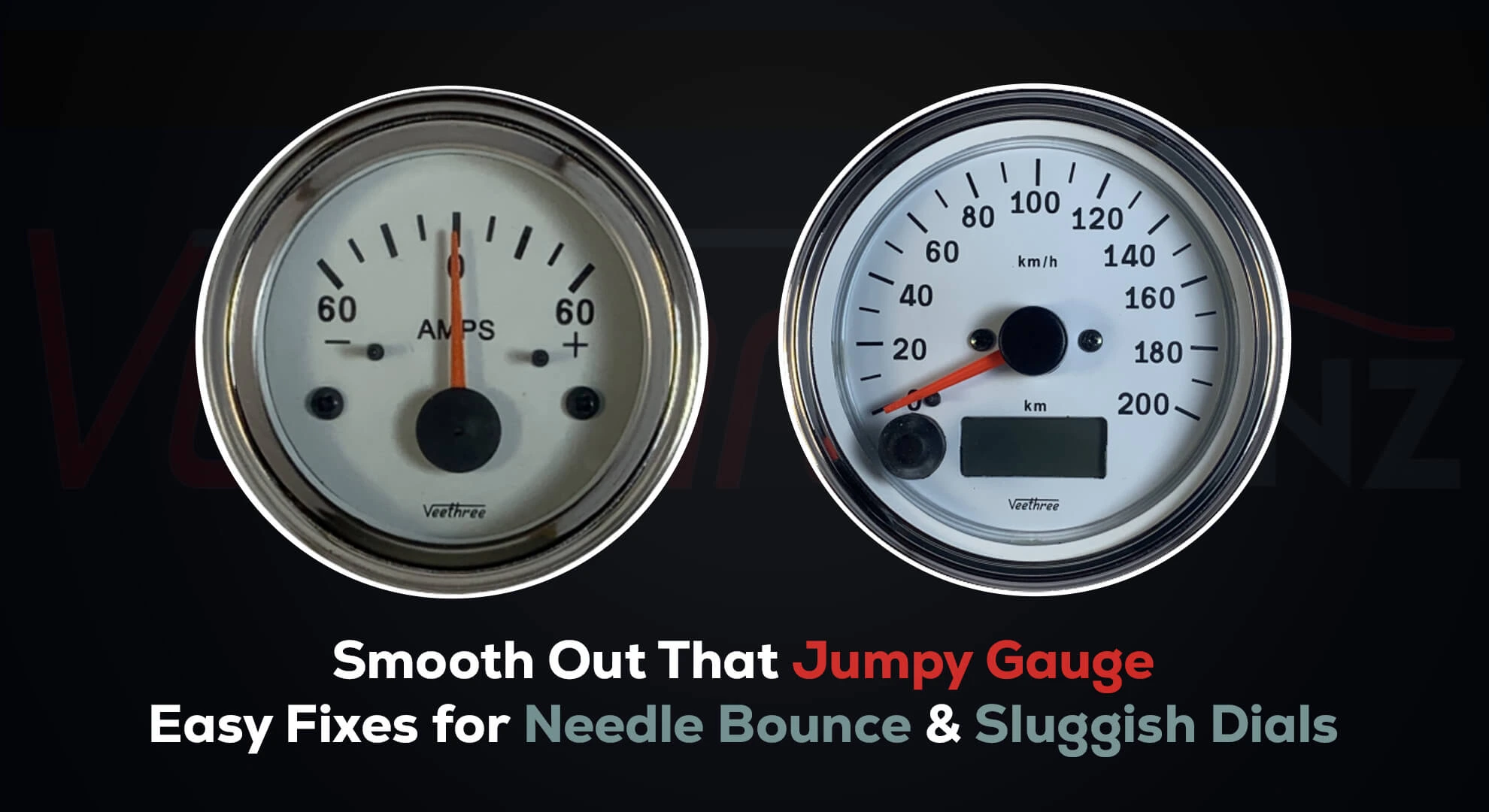
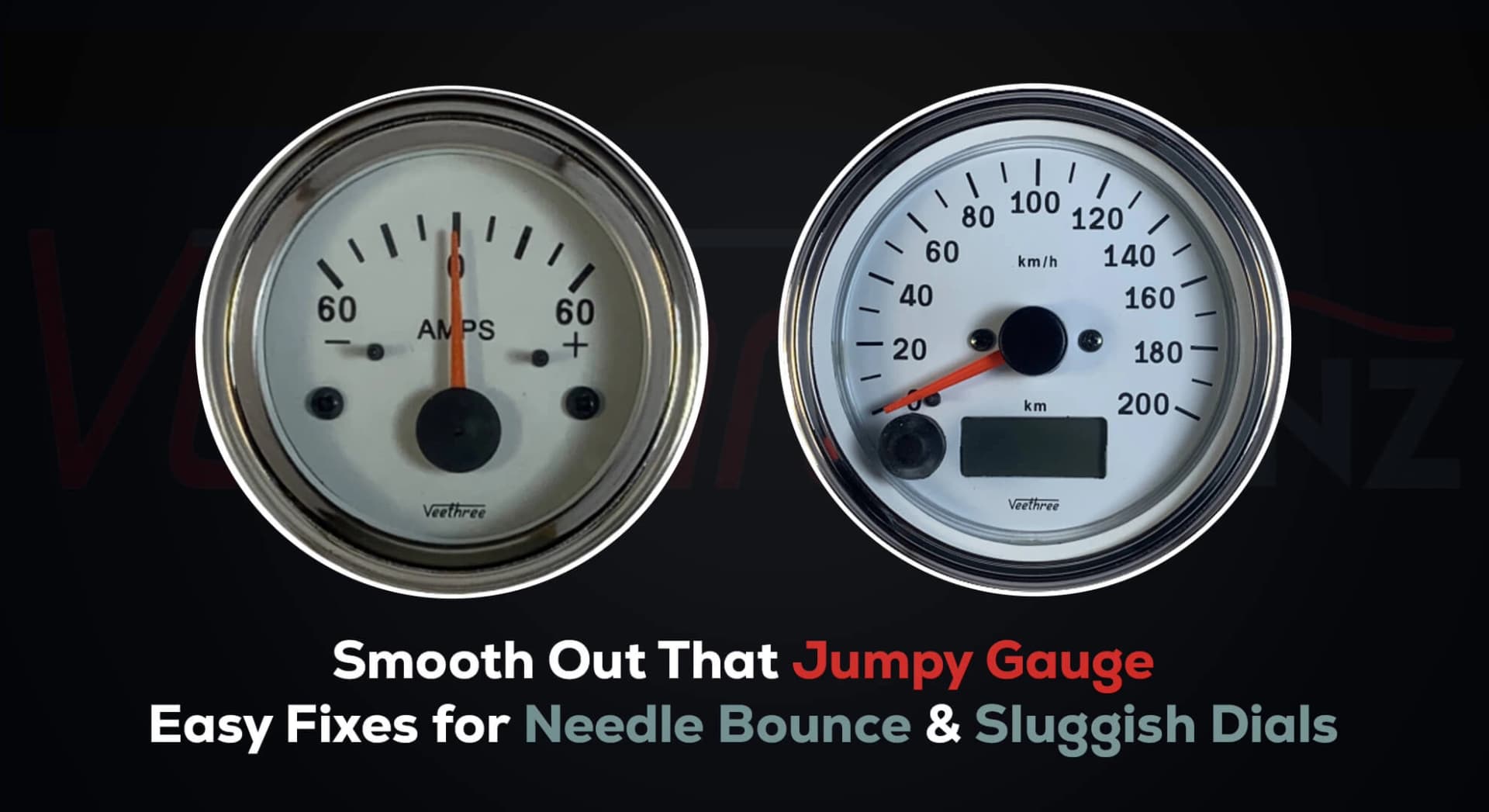
Ever looked down at the dash and spotted your speedo needle pogo sticking or your tacho lagging the engine’s song? It’s annoying, sure but it can also muddle your read on what the car’s up to. Before shelling out for a brand-new mechanical gauge, give these quick checks a whirl. You might sort the problem in an afternoon and save a bundle.
What’s Making the Needle Misbehave?
1. Old School Mechanical Gremlins- Worn speedo cable: If your vehicle still relies on a cable, frays or kinks can make the needle jiggle.
- Tired stepper motors: These little motors drive the needles in many late 90s and 2000s clusters. When they wear, the pointer twitches or hangs.
- Loose or corroded plugs: A dodgy earth or crusty connector interrupts the signal, so the needle dances.
- Voltage spikes: Sudden surges (say, from a dying alternator) can reset the cluster or send the gauges haywire.
- Faulty speed sensor: Bad data in means bad data out: the needle bounces.
- Electromagnetic interference: Aftermarket accessories or a worn ignition lead can throw electronic “noise” into the line.
Four Fast Fixes to Try First
- Inspect the speedo cable
Pop the cable free at both ends and look for frays. If it feels gritty or sticky, a clean and lube may help; if it’s damaged, swap it out. - Clean up the wiring
Disconnect the battery, pull the gauge connectors, and check for green fuzz or loose pins. A quick scrub with contact cleaner and a gentle pinch on the terminals often does the trick. - Give the cluster a reset
Disconnect the battery for 10 minutes, then reconnect. It’ll let the microcontroller recalibrate. (Heads up: you’ll lose radio presets.) - Test or replace stepper motors
If you’re handy with a soldering iron, you can swap faulty motors yourself or pick up a replacement cluster from a wrecker and transplant the good motors.
Advanced DIY Fixes: Beyond the Basics
If you've already tried the basic fixes and your Mechanical Gauges are still misbehaving, consider these more advanced solutions:
1. Resoldering Faulty Circuit Board Connections
Over time, the solder joints on the instrument cluster's circuit board can weaken or crack, leading to intermittent connections. This is a common issue in vehicles with high mileage or those exposed to vibrations. By carefully resoldering these joints, you can restore proper functionality to the Mechanical Gauges. This process requires a steady hand and some experience with soldering electronic components.
2. Replacing Stepper Motors
Many modern vehicles use stepper motors to drive the needles on the Mechanical Gauges. If these motors fail, the needles may become erratic or unresponsive. Replacing faulty stepper motors can be a cost-effective solution. However, this task involves disassembling the instrument cluster and handling small, delicate parts, so it's best suited for those with technical expertise.
🛡️ Preventive Measures: Keeping Your Gauges in Top Shape
Regular maintenance and mindful driving habits can help prevent needle bounce issues:
- Maintain Proper Tire Pressure: Incorrect tire pressure can affect the vehicle's speed sensor, leading to inaccurate speed readings.
- Avoid Overloading the Vehicle: Excess weight can strain the vehicle's electrical system, potentially affecting gauge performance.
- Regularly Inspect Electrical Connections: Ensure that all connectors are clean and secure to prevent signal interference.
- Protect the Dashboard from Excessive Heat: Prolonged exposure to high temperatures can damage the instrument cluster components.
🛠️ When to Seek Professional Help
While many needle bounce issues can be addressed with DIY methods, some problems require professional intervention:
- Persistent Issues After DIY Repairs: If the problem persists despite your efforts, it may indicate a deeper issue that requires expert diagnosis.
- Complex Electrical Problems: Issues like voltage regulation problems or complex wiring faults are best handled by a qualified auto electrician.
- Lack of Technical Expertise: If you're not comfortable with tasks like soldering or handling delicate electronic components, it's advisable to seek professional assistance.
🔄 Upgrading Your Gauges: When It's Time for a Change
If your vehicle's gauges are outdated or consistently problematic, upgrading to a new set can enhance both functionality and aesthetics:
- Modernize Your Dashboard: New Mechanical Gauges offer improved accuracy and readability, along with modern features like digital displays and customizable lighting.
- Choose Quality Brands: Opt for reputable manufacturers known for durable and reliable instruments.
- Professional Installation: Consider having the new Mechanical Gauges professionally installed to ensure proper calibration and integration with your vehicle's systems.
Keep Your Dash on Point
A healthy set of gauges is more than bling; it’s your front-line feedback on speed, revs, oil pressure and more. Tackling needle bounce early keeps your readings true and you're driving safer.
And if you decide it’s time to upgrade, Veethree Instruments stocks bullet proof Mechanical Gauges built for Kiwi conditions worth a squiz, especially if you’re after something that looks as sharp as it reads.
Happy motoring, and here’s to needles that stay rock steady. Cheers!