A dead gauge feels harmless. Until it costs you an engine, a day on the water, or a job that runs late because you trusted a needle that lied.
I see the same story again and again. Someone replaces a gauge fast. It “fits”. Then the reading is wrong. Fuel shows full forever. Oil pressure reads zero when the engine sounds fine. Temperature climbs and you notice it too late.
This post keeps it simple. If you measure a few things first, you buy once, fit it once, and move on.
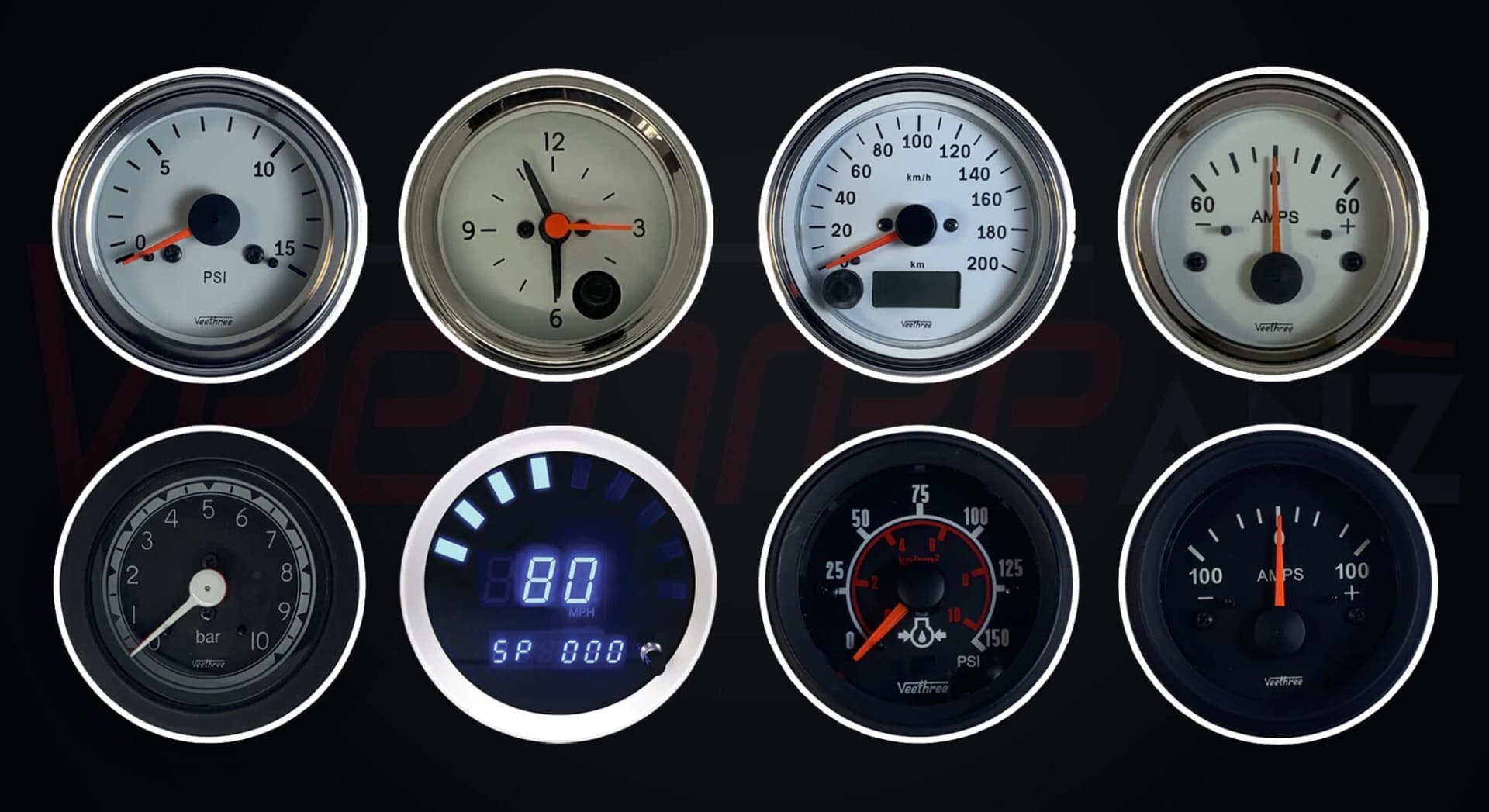
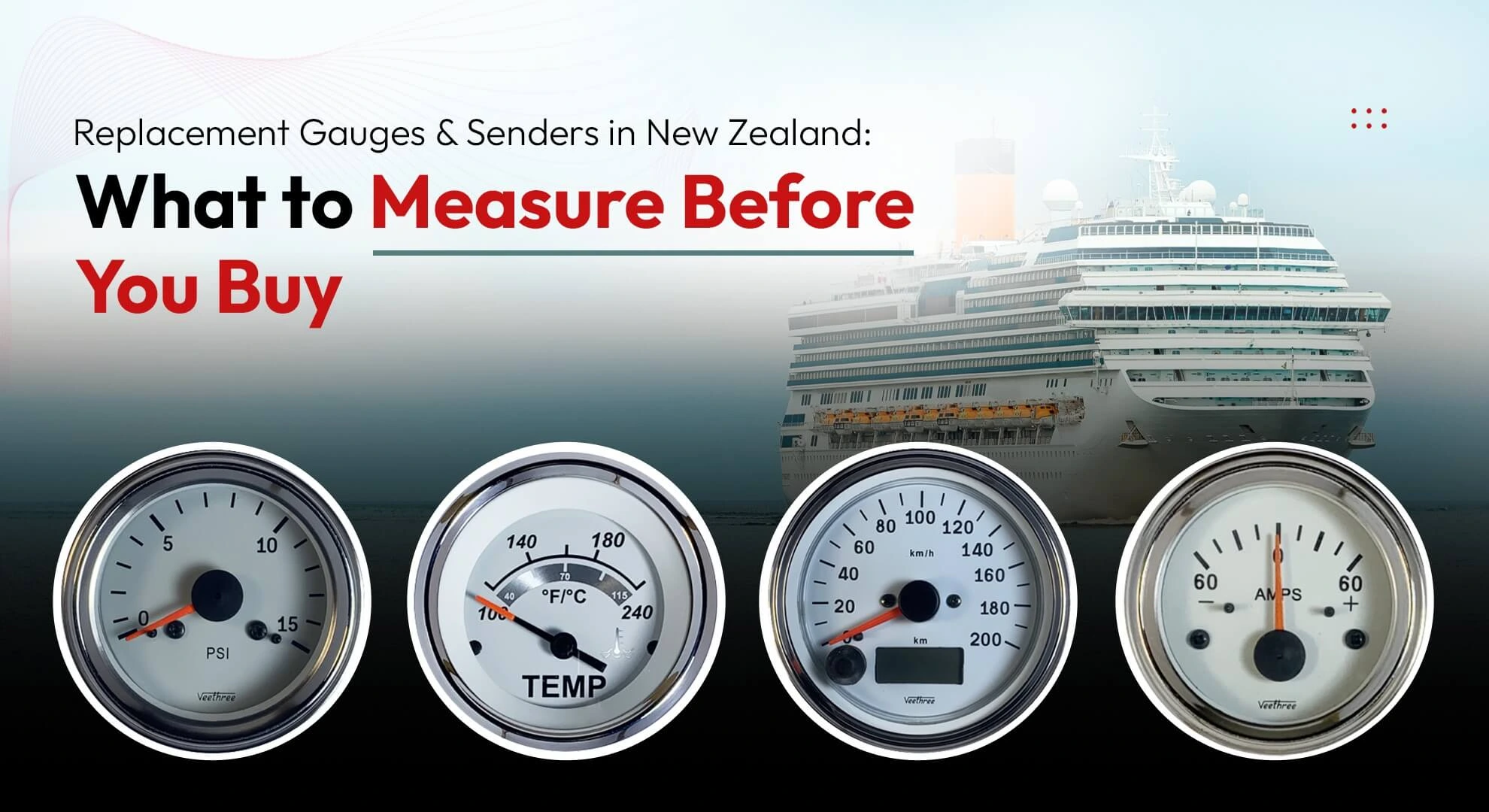
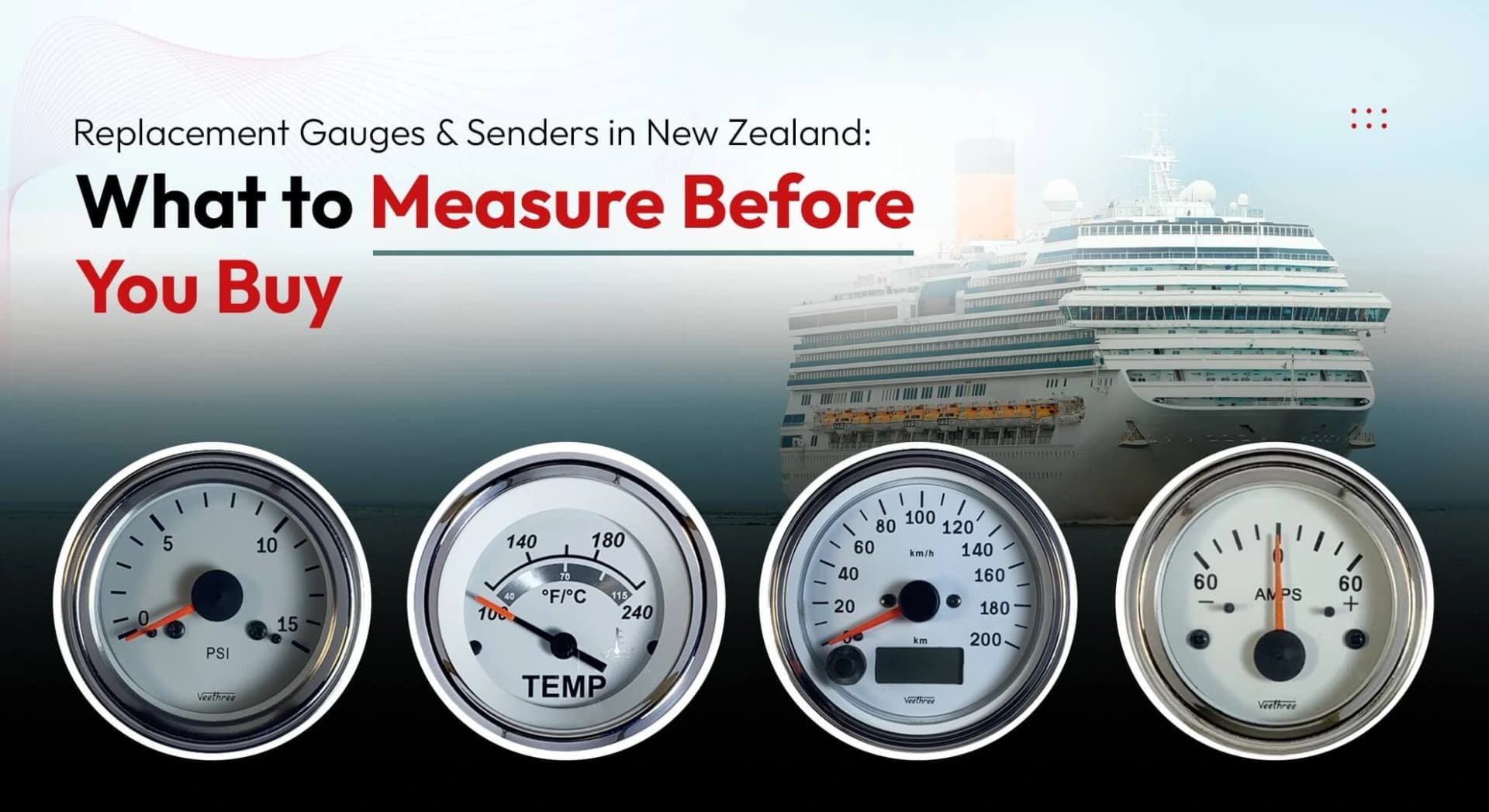
Veethree NZ stocks gauges, senders, sensors, and replacement parts for marine and equipment use, all through the local store.
The one rule that saves you money
A gauge is only as good as the sender behind it.
If the gauge and sender do not match, the display becomes a guess. And guessing is expensive.
That is why Veethree NZ sells complete options like an oil pressure gauge that includes a matching sender, and fuel gauge listings where a matching sender is part of the same setup.
What to measure first (do this before you open a cart)
1) What are you replacing, exactly
Do not start with “I need a fuel gauge”. Start with what you already have.
Take two photos:
- Front of the gauge so you capture the range and style
- Back of the gauge so you capture terminals, part markings, and how it mounts
If you are replacing boat gauges NZ owners often discover the dash has been mixed over the years. Different series, different lighting, different senders. Veethree NZ carries matched marine gauge ranges and the senders that go with them, so you can bring it back to one consistent setup.
2) Measure the hole and the mounting style
Most refit pain comes from “it almost fits”.
Measure:
- Dash cutout diameter
- Overall face diameter
- Mounting method (clamp bracket, socket style, studs)
For example, Veethree listings commonly show 52 mm gauges, which is a very common marine and equipment size.
This matters for boat gauge replacement parts New Zealand jobs where you want a clean swap without re cutting a panel.
3) Pick the gauge type by how your system works
Veethree NZ supplies electrical gauges, mechanical gauges, and digital gauges.
Here is the simple way to choose.
Electrical gaugesUse these when you already have a sender in the engine, tank, or gearbox, and you want a clean wire run to the dash. Veethree’s electrical range covers common functions like voltage, temperature, and fuel.
Measure before you buy:
- System voltage (12 V or 24 V)
- Sender type (resistive, pressure sender, temp sender)
- Terminal layout so your wiring stays tidy
Use these when the gauge reads directly through a capillary tube or pressure line. Veethree’s mechanical category focuses on pressure and temperature monitoring for marine use.
Measure before you buy:
- Capillary length you need from engine to dash
- Thread type at the engine end
- Range (temperature range or pressure range)
A real example from the Veethree store: a mechanical water temperature gauge lists a 72 inch capillary and a thermowell with a 1/8 inch NPT thread.
If your old capillary is shorter than your run, you end up routing it badly. Then it kinks. Then it fails. Do not do that to yourself.
Digital gaugesUse these when you want clear numeric readouts or a display driven by electronic signals. Veethree NZ lists a dedicated digital gauge range for marine dashboards.
Measure before you buy:
- What signal you have available (sender input, network signal)
- Power and grounding quality
- Space for the display and connector clearance
Digital setups punish lazy wiring. If your ground is poor, the display does not “sort of work”. It flickers, drops out, or acts haunted.
4) For fuel, measure the tank and the resistance
Fuel is where people waste the most money because two parts look identical but speak different “ohms”.
To buy a fuel sender that actually works with your gauge, measure:
- Tank depth
- Mounting pattern on the tank
- The resistance curve your gauge expects
Example: Veethree’s Starwhite marine fuel gauge lists a resistance curve of 240 to 33 ohm, and the same listing notes Veethree can provide reed switch fuel senders in various lengths to suit that gauge.
Veethree also sells reed switch fuel senders in different resistance ranges, including 10 to 180 ohm models, with stainless steel construction and an included installation kit noted on the product pages.
This is the heart of match gauge and sender resistance curve. If the curves do not match, the gauge reads wrong across the whole scale. Not just at empty. Not just at full. Everywhere.
5) For oil pressure, measure the thread and the range
When you replace an oil pressure gauge, confirm:
- Pressure range that suits the engine
- System voltage if it is an electrical gauge
- Sender thread so it actually screws in
Veethree NZ lists an electrical oil pressure gauge bundle that includes a matching sender, and the listing calls out the sender end fitment as 1/8 inch NPT.
That one detail saves hours.
Quick guides for common replacement jobs
How to choose replacement gauges for equipment
If this is plant, farm, or heavy equipment, treat it like a downtime problem, not a shopping problem.
Do this:
- Grab the existing part number off the gauge body if you can
- Confirm voltage and function
- Confirm sender curve or capillary and thread details
- Replace the sender when the gauge depends on it
That is your real world industrial replacement gauges selection guide. No fluff. Just what stops mistakes.
Honeywell Hobbs pressure switch replacement
If your system uses a pressure switch for control or warning, match the switching point and the thread.
Veethree NZ lists pressure switches that are manufactured by Veethree and described as replacements for specific Honeywell Hobbs part numbers, including the 76072. That product page also lists details like a factory set point around 15 PSI and a 1/8 inch NPT thread.
If you swap a pressure switch without matching the set point, you get alarms at the wrong time or no alarm at all.
Replacement Caterpillar gauges NZ
Veethree NZ has a dedicated replacement gauges category with multiple Caterpillar replacement listings, including mechanical temperature gauges.
Before you buy, measure:
- Mechanical capillary length
- End fitment thread
- Gauge size and mounting
Those Caterpillar replacement pages often list capillary length and the engine end fitment details right on the product listing.
Replacement Massey Ferguson gauges NZ
Same deal. Veethree NZ lists multiple Massey Ferguson replacement gauges, including fuel, temperature, and tachometer style items in the replacement category.
One detail I love seeing on listings is the resistance curve, because it stops wrong matches. For example, a Veethree listed Massey Ferguson fuel gauge replacement shows a resistance curve of 327 to 16 ohm.
That is exactly the kind of detail you want in your notes before you order anything.
Where people mess up (so you do not)
- They match the face, not the specs
- They ignore voltage
- They forget the sender
- They assume “fuel is fuel” and skip resistance curves
- They buy offshore because it looks cheaper, then wait weeks and still have the wrong part
Where to buy gauges shipped from NZ warehouse
If you want local fulfilment, Veethree’s NZ site states free shipping for NZ customers and says all items are available in an NZ warehouse.
Veethree ANZ Ltd also publishes warranty terms, including one year coverage, and a longer period stated for the marine range.
Wrap up
If you take nothing else from this, take this.
Measure first. Then buy.
Tonight, spend ten minutes with a tape measure and your phone:
- Measure the dash cutout
- Confirm voltage
- Write down the range
- Identify the sender type and resistance curve
Then go straight to the Veethree NZ categories for replacement marine gauges NZ, electrical gauges, mechanical gauges, digital gauges, and replacement gauges and senders in New Zealand, and match what you measured to the product listing details.
If you want a fast sanity check, send Veethree NZ the two photos and your measurements before you order. You save money. You save time. And you stop trusting a gauge that has already proved it will lie.
1What’s the #1 thing to check before replacing a gauge? Make sure the gauge and sender match. If the sender resistance curve doesn’t match what the gauge expects, the reading will be wrong across the scale (not just at empty/full). 2What should I measure so the new gauge actually fits my dash?Measure:- Dash cutout (hole) diameter
- Gauge face diameter
- Mounting style (bracket, socket, studs)
- Front (range + style)
- Back (terminals, markings/part numbers, mounting)
- Electrical gauges use a sender and wiring to the dash.
- Mechanical gauges read via a capillary tube or pressure line (fitment threads + length matter).