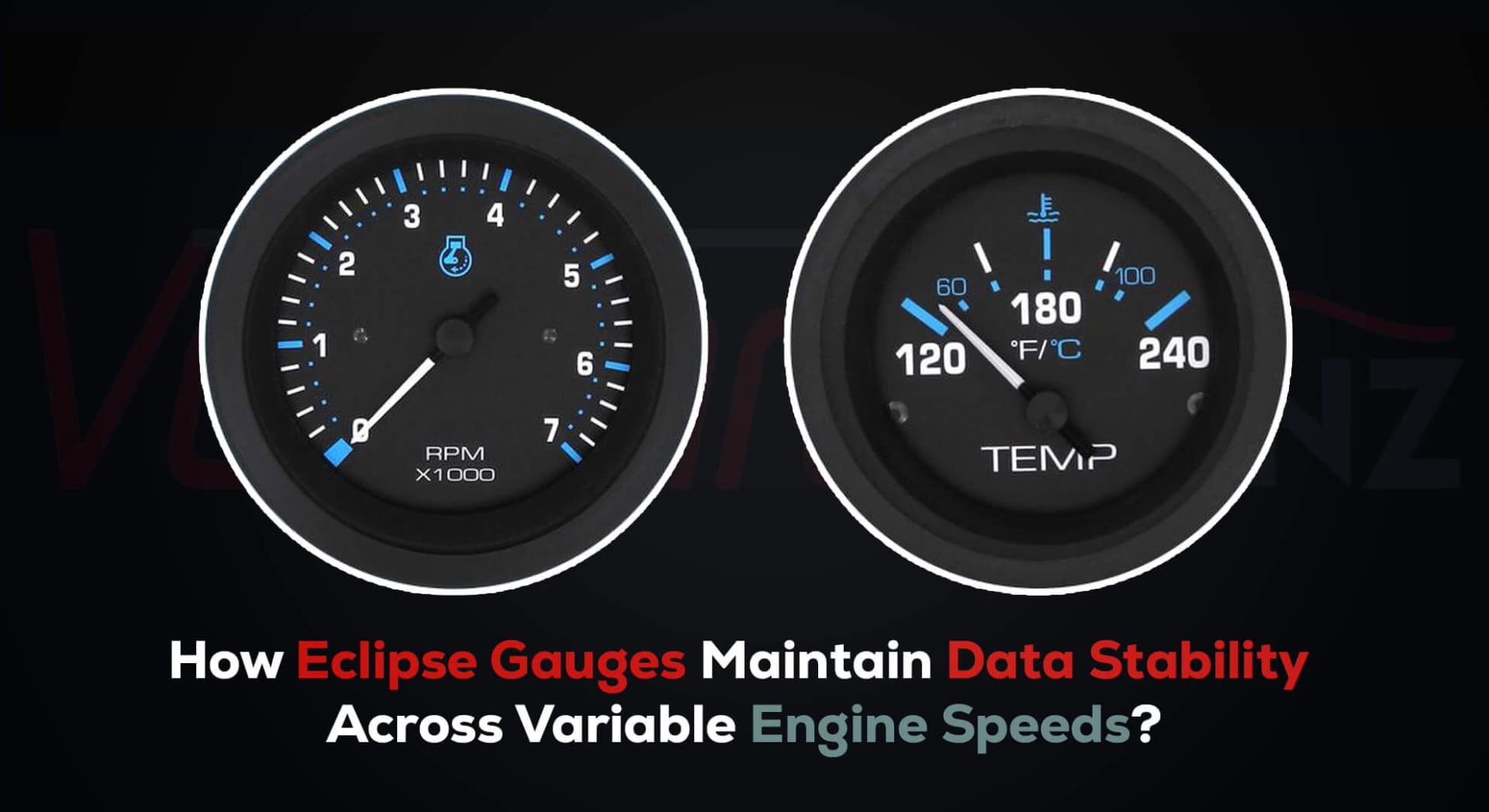
In marine operations, precision is non-negotiable. Whether you're managing a single recreational craft or operating a commercial fleet, consistent engine monitoring is at the heart of vessel safety and performance.
And when engine speeds fluctuate—as they often do during acceleration, trolling, or navigating variable sea states—your gauges need to deliver stable, trustworthy data.
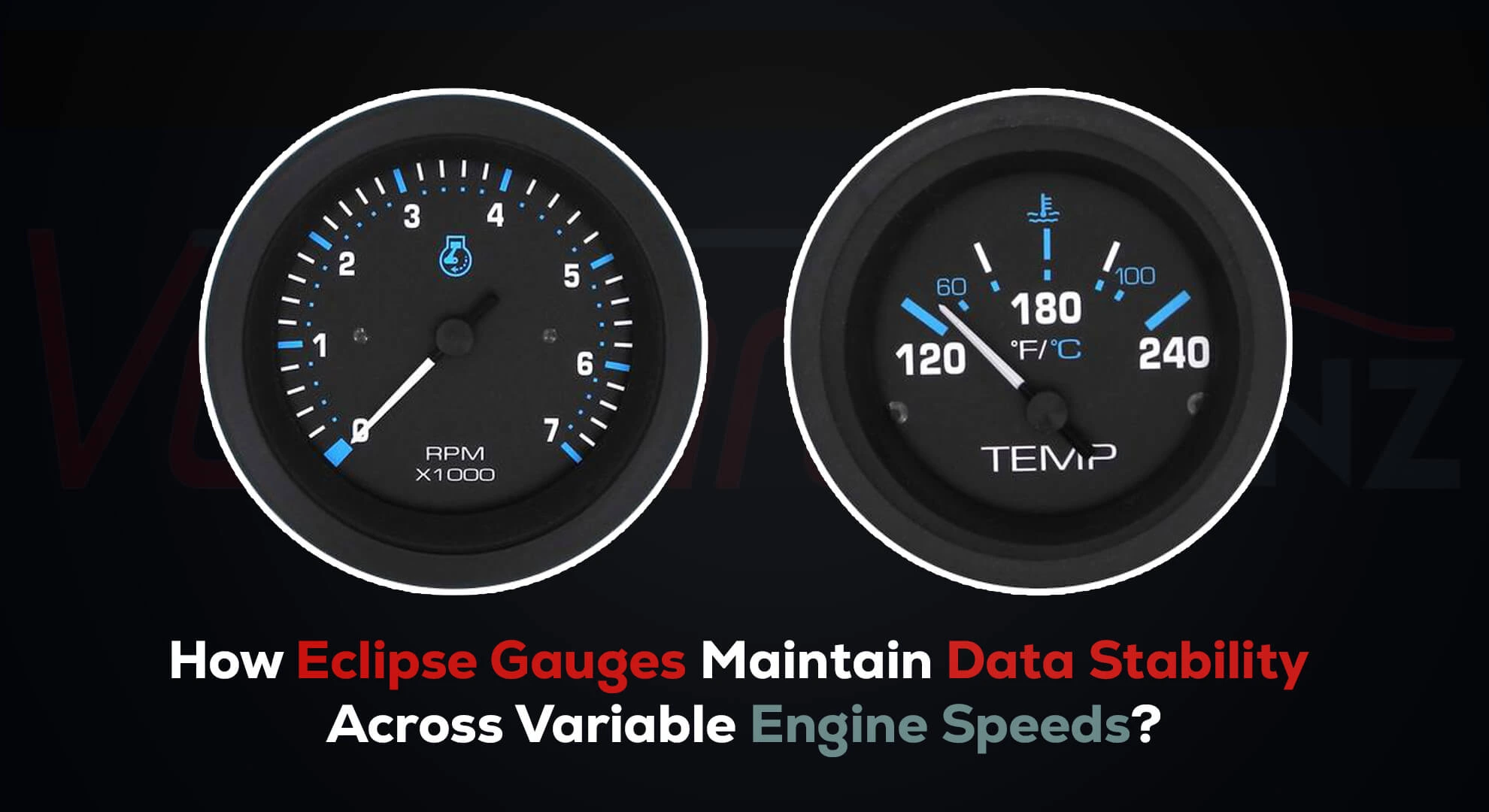
This is where Eclipse Gauges prove their value.
Designed specifically for the demands of marine environments, Eclipse Gauges are built to maintain accuracy and display clarity no matter how your RPMs behave.
In this article, we break down how these gauges manage to stay rock-solid under changing loads, and why they’re increasingly becoming a top pick for marine professionals in New Zealand.
The Challenge of Variable Engine Speeds at Sea
Let’s start with a familiar scenario: You’re navigating through shifting tidal currents or manoeuvring into port. Your engine speed isn’t constant—it ramps up, dips down, and settles again.
During these changes, fluctuations in oil pressure, temperature, and electrical output are expected.
The problem? Not all gauges handle these fluctuations well.
Some may jump or lag. Others might deliver delayed or inconsistent readings due to mechanical vibration, electrical noise, or signal distortion from senders.
And when that happens, the risk of missing early signs of failure increases.
That’s where Eclipse Gauges stand out—they're engineered to keep their readings stable and trustworthy, even when engine inputs are anything but.
What Makes Eclipse Gauges So Stable?
Damped Needle Movement for Vibration Control
Marine engines don’t run silently—and they don’t sit still. Constant vibration, especially at varying speeds, can make conventional gauges flutter or overreact.
Eclipse Gauges feature a well-balanced, damped needle mechanism. This design absorbs sudden movements and smooths out visual display shifts, so you’re not watching the needle bounce while trying to interpret what’s actually happening under the hood.
Why It Matters: Reduces false alarms and unnecessary corrections. Helps operators make calm, calculated decisions—even in rough seas.
Calibrated Responsiveness Across the RPM Range
From idle to high cruise, Eclipse Gauges maintain proportional accuracy across the engine's full operating range. Their movement systems are finely tuned to respond to changing input signals from pressure, temperature, and voltage senders without "overshooting" or “dragging.”
Why It Matters: You get clear, real-time feedback—whether your engine is climbing toward peak output or coasting at low speed. That kind of predictability builds trust in your instruments.
Signal Integrity with Matched Sender Compatibility
Eclipse Gauges are designed to work with marine-grade senders that output consistent, noise-resistant signals—even when the electrical system is under strain. The sender-gauge pair is critical here—cheap or mismatched components can lead to signal bounce or data drift, especially at high RPM.
Why It Matters: Ensures data accuracy under load.
Stable Electrical Signals = Stable Readings = Better Operational Decisions.
Marine-Ready Housing and Internal Stability
Beyond electronics, the mechanical integrity of the gauge matters too. Eclipse Gauges are constructed with anti-corrosion materials and sealed to prevent moisture ingress, salt intrusion, or thermal warping—all of which can skew readings over time.
Their consistent performance isn’t just about the first voyage—it’s about the hundredth.
Why It Matters: You’re not recalibrating or second-guessing gauges every few trips. That’s a major benefit for long-term operational efficiency.
Designed for New Zealand Marine Environments
New Zealand’s marine landscape is as diverse as it is challenging—calm inshore bays, choppy coastal stretches, and long-distance blue water passages. These dynamic conditions mean engines rarely sit at one consistent RPM for long.
Eclipse Gauges are particularly suited for these waters because they don’t just “work” across engine speeds—they maintain readability, response clarity, and mechanical durability, all tailored for marine use.
Whether you’re powering through Cook Strait or trolling for kingfish in the Bay of Islands, these gauges hold steady.
Supporting Performance Monitoring with Reliable Feedback
When engine speeds vary, it’s not just about what the RPMs are doing—it’s about how the whole system responds. Oil pressure might dip briefly. Coolant temperature might rise slightly under higher loads.
Electrical systems might show a small drop when auxiliary power kicks in. The key to managing these responses is real-time visibility—and Eclipse Gauges deliver that.
Real-Time Clarity for Preventive Action
With smooth needle motion and reliable electrical signal capture, Eclipse Gauges allow operators to detect patterns early.
A slow drift in oil pressure? A slight temperature increases over time.
These are details that can be easy to miss with cheaper gauges.
Why It Matters: When you see issues as they’re developing—not after they’ve become problems—you avoid mechanical failures and reduce long-term wear on critical systems.
Seamless Integration into New or Existing Panels
Whether you're outfitting a new build or retrofitting a legacy system, Eclipse Gauges fit right in. They’re designed with standard marine gauge cutouts, clear bezels, and wide compatibility with sender types commonly used across vessels in New Zealand.
They don’t require advanced calibration setups or proprietary systems. Just accurate pairing, proper sealing, and you're good to go.
Why It Matters: Simpler installation means less downtime, lower labour costs, and fewer compatibility headaches during upgrades.
Long-Term Stability Means Lower Maintenance
Some gauges require frequent recalibration or struggle to retain alignment over time—especially when faced with rough seas and vibration-heavy engine rooms. Eclipse Gauges resist mechanical drift thanks to their sealed internals and robust movement systems.
Their housings prevent fogging, lens distortion, and saltwater corrosion—three common culprits behind inconsistent readings in marine gauges.
Why It Matters: Less recalibration means your team spends more time operating and less time troubleshooting instruments. A true value-add for busy marine operations.
Eclipse Gauges vs. Traditional Marine Gauges
Let’s be clear: Eclipse Gauges don’t reinvent the wheel—they just build it better. Compared to traditional Marine Gauges, Eclipse models offer:
Feature
Vibration Resistance
Readability in Low Light
Signal Compatibility
Installation Flexibility
Performance Under Load
Traditional Gauges
Moderate
Variable
Sometimes Limited
Standard but varied
May show lag or bounce
Eclipse Gauges
High (damped needle movement)
Enhanced with anti-fog, high contrast
Optimised for modern senders
Plug-and-play for most vessel setups
Smooth, stable readings across RPM
Why It Matters: Eclipse Gauges are not only precise—they’re purpose-built for how marine engines actually operate.
Our Verdict
When your vessel’s performance is on the line, especially in the unpredictable waters of New Zealand, precision isn’t just preferred—it’s required. Eclipse Gauges bring that precision to your fingertips, delivering stable, clear, and accurate readings even when engine speeds are constantly changing.
They take the guesswork out of monitoring and allow marine professionals to make confident, timely decisions—whether you're out on a fishing charter, running a passenger ferry, or managing a long-range commercial trip.
With easy integration, durable design, and a reputation for data stability, Eclipse Gauges offer exactly what marine operators need: dependable insight, not distraction.